
Introduction to the English Language in the 21st Century
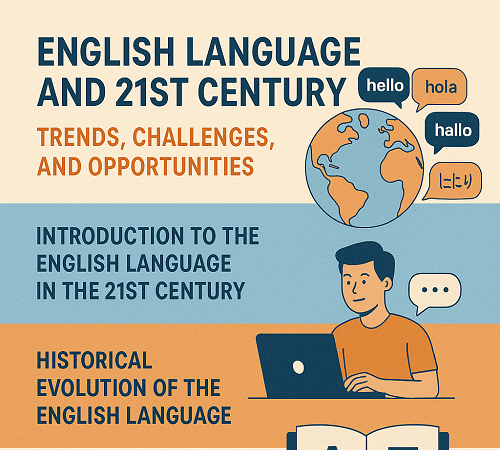
The English language in the 21st century isn’t just a communication tool-it’s a global connector that shapes education, diplomacy, science, business, and even social media. With over 1.5 billion speakers worldwide, English has become the world’s lingua franca, bridging nations, industries, and cultures.
Unlike static languages, English evolves rapidly, absorbing slang, adopting digital expressions, and integrating cultural nuances from across the globe. From traditional classrooms to TikTok trends, English continues to demonstrate its resilience and adaptability.
Historical Evolution of the English LanguageOld English to Modern English: A Brief Timeline
The journey of English began in the 5th century when Anglo-Saxon settlers brought Germanic dialects to Britain. Over time, Middle English emerged, heavily influenced by Norman French after the 1066 Norman Conquest. By the Renaissance, English transitioned into Early Modern English, enriched by Latin and Greek vocabulary. Today’s Modern English reflects centuries of cultural and linguistic layering.
Global Spread and Colonial Influence
The British Empire (16th–20th century) expanded English across continents. Countries from India to Nigeria to Australia adopted English as either a native, official, or secondary language. This legacy remains visible, with English serving as the official or second language in over 75 nations.
English as a Global Lingua Franca Today
English in International Business and Trade
In an interconnected world, English is the default business language. From international contracts to corporate meetings, fluency in English opens career opportunities. Global trade giants like the World Trade Organization conduct business primarily in English.
English in Science, Technology, and Innovation
With over 80% of research papers published in English, it’s the key to scientific collaboration. Innovators and researchers use English to share breakthroughs, ensuring global accessibility to knowledge.
Popular Culture and Media in English
From Hollywood films to Netflix originals, English dominates pop culture. YouTube, Spotify, and social media platforms spread English phrases, slang, and trends worldwide-making it the language of memes, music, and mass entertainment.
The Impact of Digital Communication on English
Internet Slang and Abbreviations
The digital era has transformed English into a fast, punchy medium. Expressions like “LOL,” “BRB,” and “FOMO” are no longer niche—they’re mainstream.
Influence of Social Media Platforms
Twitter’s 280-character limit forced brevity, while TikTok’s short-form videos pushed creativity in linguistic expression. Social media continues to shape how English is written and understood.
Emojis and Visual Language Integration
Emojis complement text, acting as emotional punctuation. A smiley face 🙂 can soften criticism, while a fire emoji 🔥 signals excitement—making communication more universal.
English in Education and Global Learning
ESL (English as a Second Language) Trends
Millions of students worldwide study English, motivated by career opportunities and access to global knowledge. China, India, and Latin America lead in ESL learners.
E-learning and Online Courses in English
Platforms like Coursera, Udemy, and Khan Academy make English-based education accessible globally. Students in remote regions can now learn from Ivy League professors.
The Role of English in Academic Research
English dominates academia, making it the medium for scholarly publications. Students and researchers must engage with English to stay relevant in global discussions.
The Role of Technology in Shaping Modern English
Artificial Intelligence and Machine Translation
AI tools like Google Translate and ChatGPT make English more accessible to non-native speakers. However, over-reliance on them risks diminishing deep language mastery.
Voice Assistants and Pronunciation Shifts
Voice-enabled devices like Alexa, Siri, and Google Assistant are influencing accents and pronunciation patterns. Users adjust their speech for better recognition, subtly reshaping spoken English.
Cultural Diversity and the Evolution of English
Influence of Non-native Speakers
Non-native speakers now outnumber native speakers, shaping how English is spoken globally. This influence drives the rise of simplified grammar and hybrid vocabulary.
Hybrid Languages and Code-Switching
Languages blend with English to form hybrids like Spanglish (Spanish + English) and Hinglish (Hindi + English). These hybrid forms enrich local identity while maintaining global connectivity.
Challenges Facing the English Language in the 21st Century
Language Simplification and Grammar Erosion
Texting and online chats often disregard traditional grammar rules. While efficiency is gained, long-term literacy might suffer.
Threats from Machine-translated Communication
If AI translation becomes flawless, will English remain necessary? Experts suggest human nuance and cultural context will keep English indispensable.
Digital Divide and English Proficiency Gap
Access to quality English education is uneven. Developing nations often face barriers in digital learning and proficiency, widening socio-economic gaps.
Opportunities for English in the Future
English in Global Diplomacy
English remains the primary language of diplomacy. From UN discussions to peace talks, it facilitates negotiations and resolutions.
English for Cross-cultural Collaboration
In multinational industries, English bridges cultural gaps, allowing diverse teams to innovate, collaborate, and create without language barriers.
FAQs on English Language and the 21st Century
1. Why is English important in the 21st century?
Because it serves as the main communication tool for business, science, and diplomacy worldwide.
2. Is English losing its importance due to other languages?
Not yet. While Mandarin and Spanish are rising, English still dominates global communication.
3. How has technology changed English?
It has introduced slang, changed communication styles, and influenced how people pronounce words.
4. What’s the future of English in education?
English will remain vital, especially in online learning and global research access.
5. How do non-native speakers affect English?
They enrich it by adding new vocabulary, accents, and hybrid forms.
6. Will AI replace the need to learn English?
Not entirely. Human communication, context, and cultural understanding go beyond translation.
Conclusion
The English language in the 21st century is more than just words it’s a living, evolving force. Rooted in history yet propelled by technology, English adapts to cultural shifts, digital platforms, and global needs.
While it faces challenges like grammar erosion and digital inequality, its opportunities in diplomacy, education, and innovation ensure it will remain the world’s most powerful communication tool.